


Wondering how to get from Paris to Mont Saint-Michel by train? This guide covers everything you need to plan the perfect rail journey, from the best routes and transfer options to current schedules, ticket tips, and what to expect on arrival.
How It Actually Works

You start at Paris Montparnasse. From there, you take a TGV high-speed train to either Rennes or Pontorson. Rennes is the more common route, especially if you want speed. Once you get off the train, a shuttle bus meets you and takes you straight to the foot of Mont Saint Michel. Simple in theory. Mostly smooth in practice.
Travel time can vary depending on which route you pick, your connection times, and whether you’re booking during high season. Expect anywhere from 3 hours 11 minutes to about 4.5 hours total.
Route Options That Make Sense

You’ve got a few route combos to choose from:
- Paris Montparnasse → Rennes → Mont Saint Michel Shuttle
- Paris Montparnasse → Pontorson-Mont-Saint-Michel → Shuttle
- Less commonly: Paris Montparnasse → Villedieu-les-Poêles → Shuttle
Pontorson is the closest station to the Mont. Rennes is faster if you’re using the TGV. Either way, you’ll need to hop a shuttle for the final stretch. Buses are timed with train arrivals, so wait times are usually minimal.
The Scenery: Not a Throwaway Detail
You’re not just getting from A to B. The ride has some surprisingly nice stretches—rolling Normandy farmland, small villages, and in the final approach, glimpses of the Mont itself rising out of the bay. If you get a window seat, stay alert after Rennes or Pontorson. The last leg, especially by bus, is full of photo-worthy moments.

Key Stations and Transfers
- Paris Montparnasse: This is your starting point. It’s a busy hub but well-signposted.
- Rennes: Most TGVs from Paris arrive here in just over two hours. You switch to a bus here if you take this route.
- Pontorson: Smaller station, closer to the Mont. Some regional TER trains stop here, especially if you’re avoiding a bus from Rennes.
- Villedieu-les-Poêles: Less common but still valid. Regional trains and Nomad buses operate from here.
Booking the Right Ticket
Your best move? Get a combined train + shuttle ticket. SNCF and The Trainline both offer these, and they simplify things big time. You don’t want to be scrambling for bus fare in Pontorson or trying to coordinate mismatched schedules.
Booking in advance (1–2 weeks) usually gets you better prices and guarantees a seat—important in summer or school holidays.
Schedule Tips You Shouldn’t Ignore
- First trains leave Paris around 7:00–9:30 a.m.
- Last viable departures for same-day visits are early afternoon. Don’t cut it close.
- Return trips are limited. If you’re not staying overnight, plan carefully.
Best advice? Catch a morning train to enjoy daylight at the Mont and avoid the worst of the crowds.
What It Costs
Prices vary based on how early you book, class of service, and time of year. Here’s a rough breakdown:
- Advance fares: €28–€55 one way (standard class)
- Peak or last-minute: Can hit €100+
- Kids (4–11): Usually around €18–€20
First class gets you more space but isn’t necessary for such a short ride. What matters more is timing and convenience. Book early and lock in that combo ticket.
Train Operators That Matter
- TGV INOUI: High-speed trains from Paris to Rennes
- TER: Regional trains, including connections to Pontorson or Villedieu
- Nomad Train + Bus: Normandy regional service with integrated transfers
All are under the SNCF umbrella, and most major platforms like SNCF Connect, The Trainline, or Omio sell tickets that include both segments.
Luggage and Mobility
There’s no baggage check, so keep it manageable. Overhead racks and luggage areas are available, but they fill fast. Pack light and keep valuables in a small bag that stays with you. Transfers (especially at Rennes) are easy but do require handling your own stuff.
Most stations and shuttles are accessible. If you need help, request SNCF Accès Plus assistance ahead of time. Elevators, ramps, and staff support are available at major stops.
Onboard and On-the-Go Tips
- Bring water and a snack. Not all trains have cafes.
- A power bank and downloaded maps come in handy.
- Dress for the weather at the coast—windy, often wet, even in summer.
- Keep your ticket handy for both train and bus segments.
- Don’t count on strong cell service near the Mont. Screenshots help.
Final Stretch: The Shuttle to the Mont
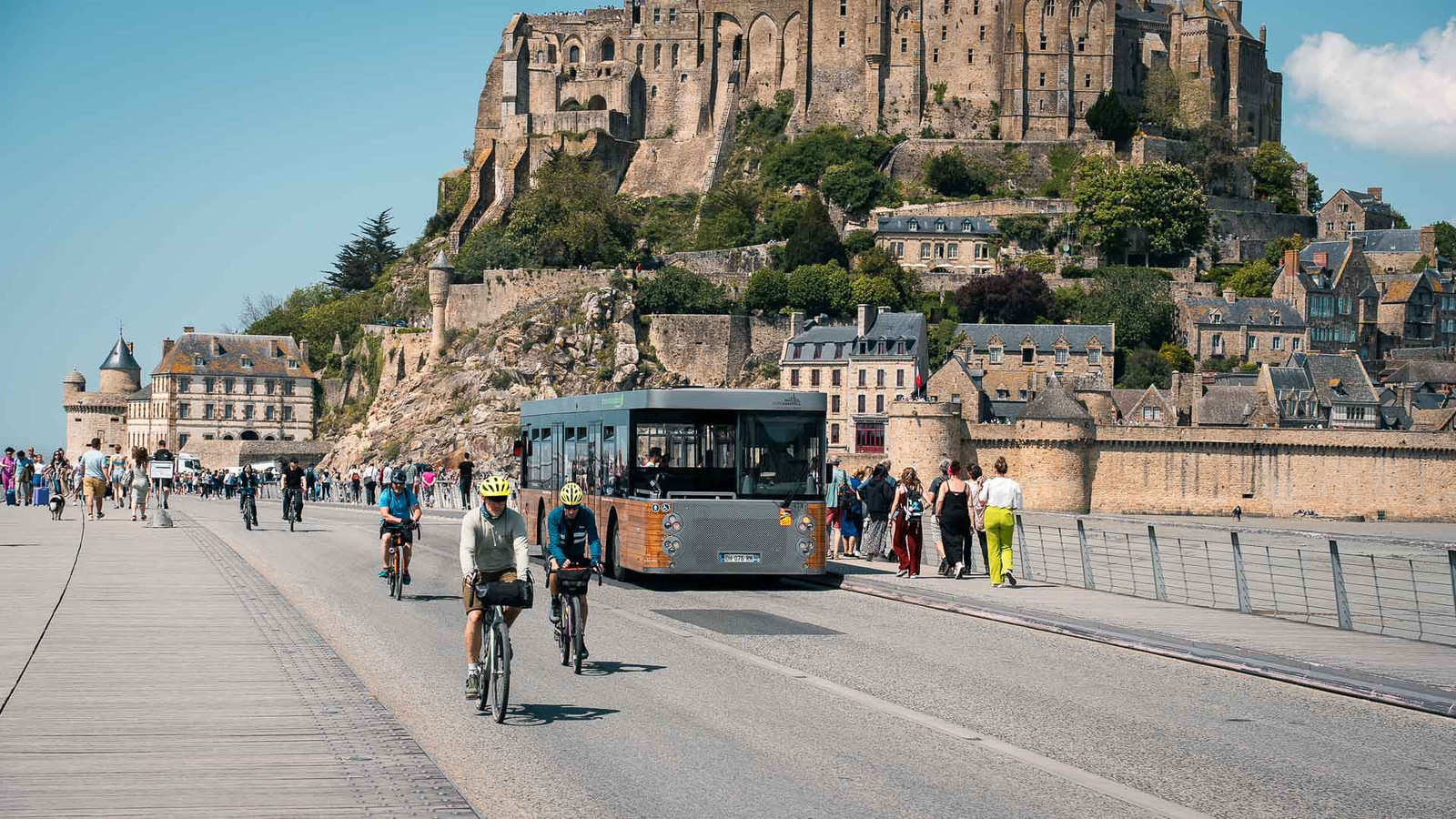
From Pontorson or the bus from Rennes, you’ll end up at the mainland parking area. From there, you can either hop on the free “Le Passeur” shuttle (10–12 mins) or walk across the causeway (2.5 km, about 40–50 minutes). Either way, the views are epic. Especially if the tide’s in.
Buses are timed with train arrivals, but in high season, lines can build. Still, they’re efficient, clearly marked, and accessible. Just follow the crowd.