


Tucked on the edge of Mont-Saint-Michel, where the stone meets sea and tides gnaw at the coast like clockwork, sits a modest granite chapel. Blink and you’ll miss it. No glowing lights, no queues. Just wind, rock, and a sliver of sky behind a Romanesque silhouette. This is Saint-Aubert Chapel, and it might be the most overlooked sacred site in France.
A Chapel With an Origin That Starts in a Dream
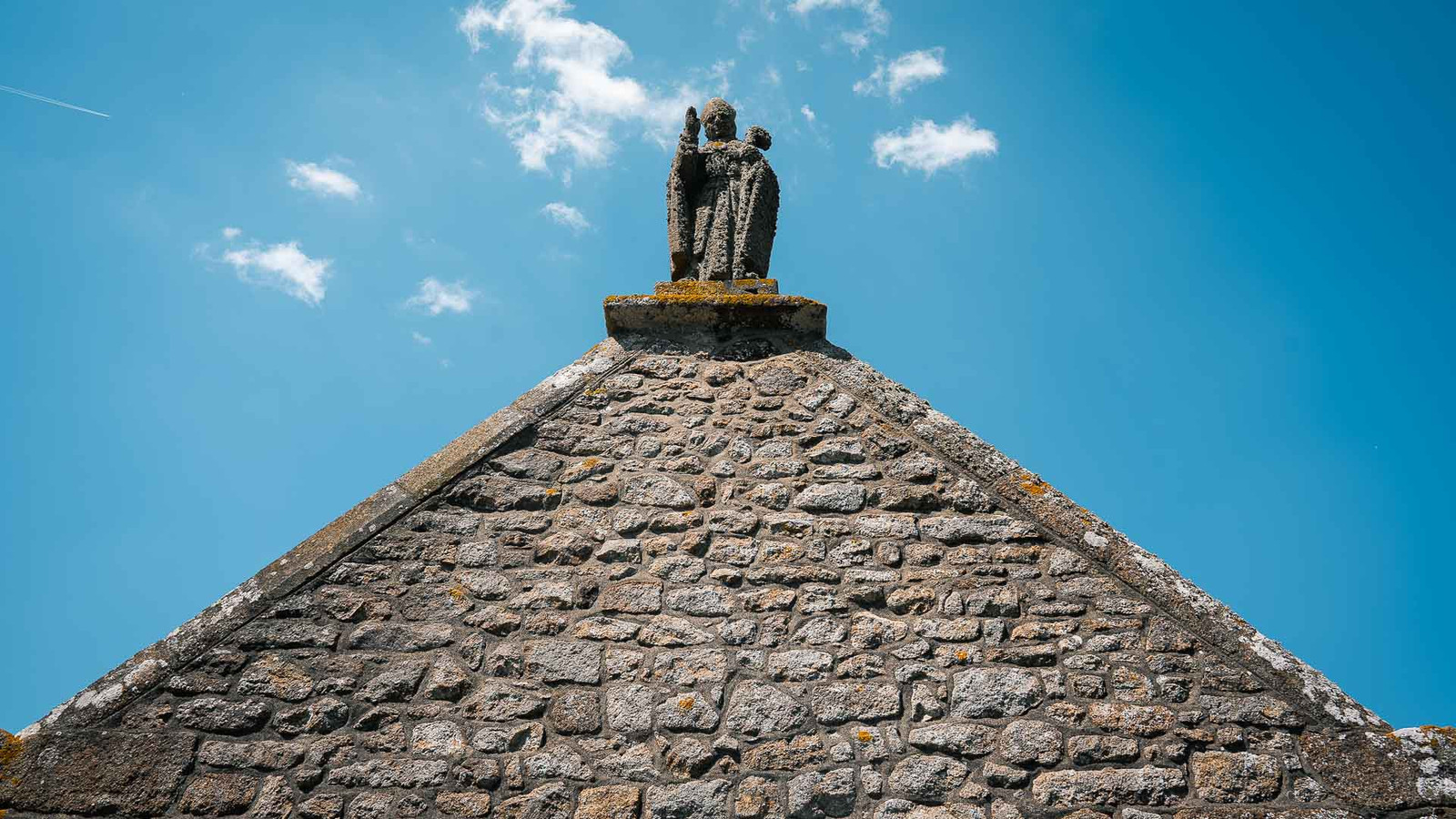
They say Bishop Aubert of Avranches was chosen. Not by election, not by any council. Chosen by a vision, from the Archangel Michael himself. Not once, but three times. The story goes that Aubert ignored the first dream. Dismissed the second. By the third, Michael got impatient and burned a hole right through the bishop’s skull with a divine finger. That relic, the actual skull, supposedly rests in Avranches to this day, with a neat hole to prove the legend.
In 708, Aubert obeyed. He laid the first stone of a sanctuary on Mont-Tombe, later renamed Mont-Saint-Michel. The chapel, built centuries later in the 12th century, bears his name. It’s not just a tribute, it’s a return to the beginning.
Built on a Boulder, Touched by the Sea
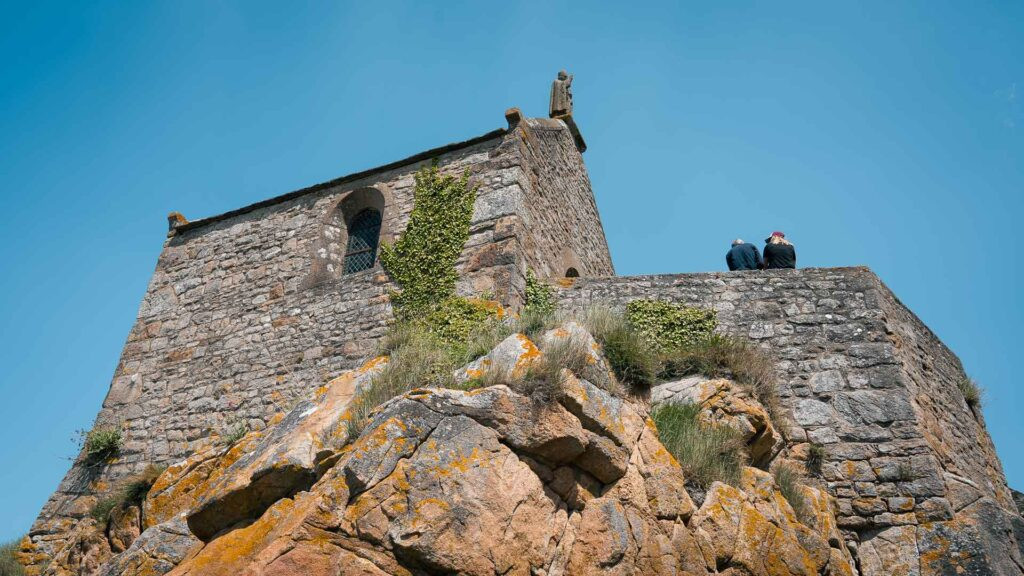
Constructed during the abbacy of Robert de Torigni (circa 1154–1186), the Saint-Aubert Chapel was never meant to impress with size. It was wedged onto a rocky outcrop, possibly an old pagan menhir, those pre-Christian monoliths with long-forgotten meanings. At high tide, the water rises and surrounds it, isolating the chapel like a ship on a stone island. At low tide, it becomes approachable on foot, though the ground is uneven and the sea never feels far.
Romanesque through and through, the chapel’s structure is made of coarse local granite. The walls are squat and solid. Nothing fancy. The kind of place built not for tourists or photos but for prayer. Or survival.
From Pagan Stone to Christian Shrine
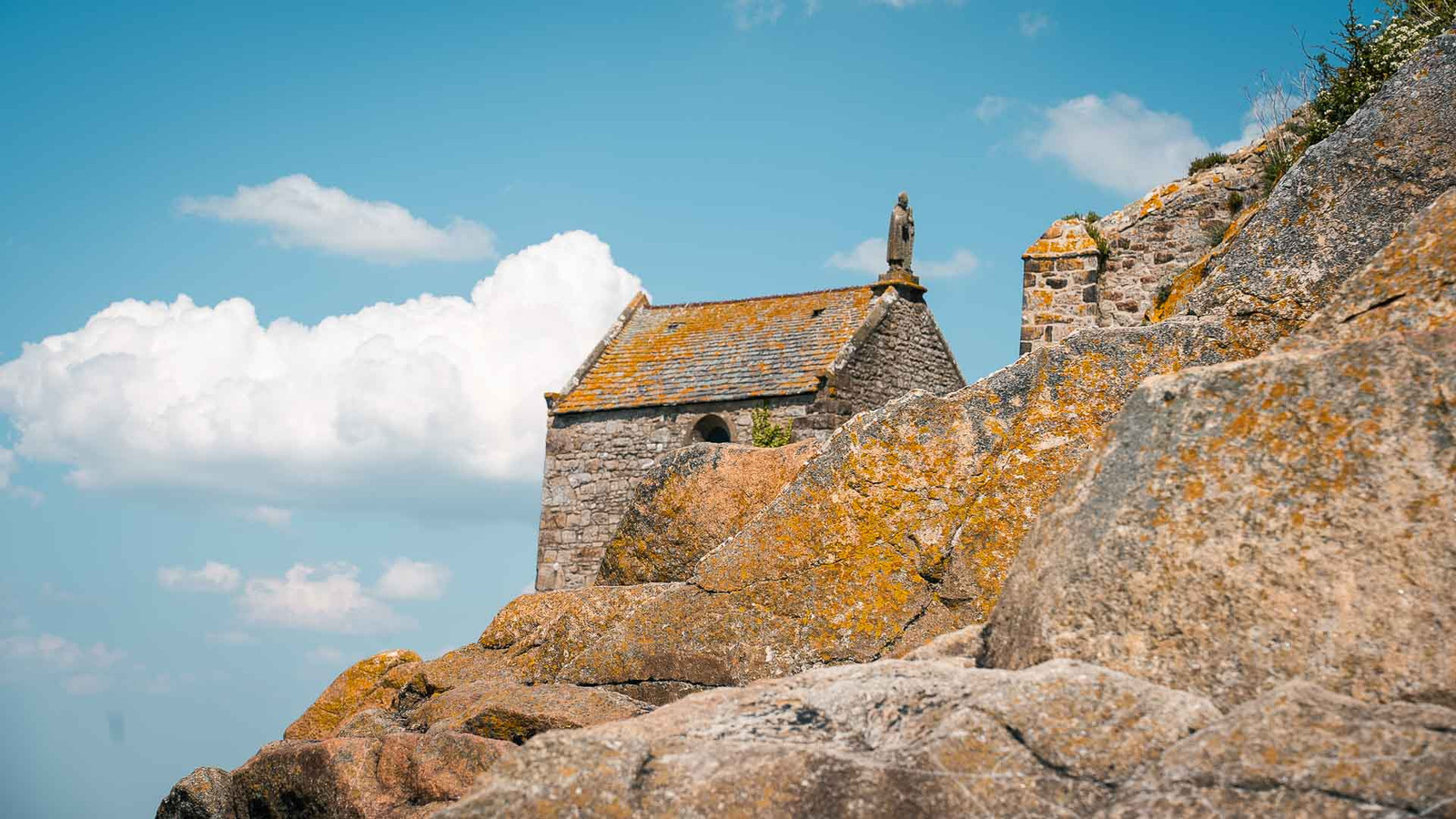
There’s something primal about where this chapel stands. The placement isn’t just symbolic. Pilgrims arriving in the Middle Ages would first encounter this low, quiet structure before ascending toward the abbey. A spiritual warm-up. Some thought the boulder it sits on had sacred energy, a remnant of an older, earthier worship, repurposed into Christian form.
Inside, it’s bare. No marble, no gilded altars. The nave is tight, lit mostly by whatever sunlight sneaks through the modest windows. A stone altar, a few time-worn niches. Some days, it smells faintly of seaweed and wet rock, which feels right.
A Survivor Among Monuments
Despite its size, the chapel has seen things. It was altered in the 11th century, absorbed partly into the abbey’s foundations. Centuries passed. It eroded. Parts cracked. Yet somehow, it stayed standing. In the 1960s, a team of restorers brought it back to life. They peeled off later additions, hunted through archival references, and pieced together the chapel’s original form like an archaeological puzzle. What remains is mostly 12th century, stripped back, scarred, and real.
The chapel became a protected historical monument in 1908. Later, in 1979, it joined the rest of the Mont in receiving UNESCO World Heritage status.
Part of a Pilgrim’s Path
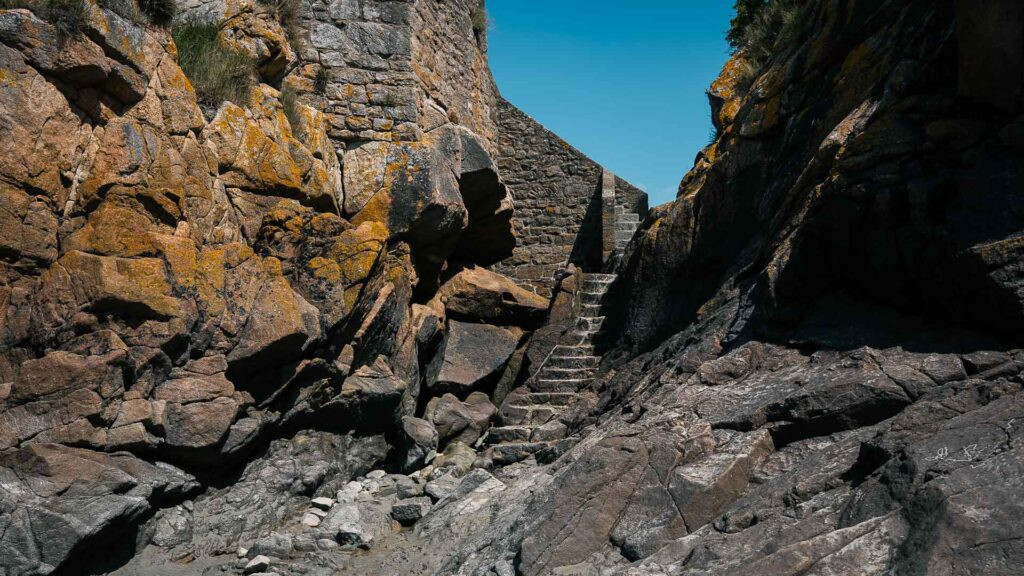
Saint-Aubert isn’t just a side attraction. For medieval pilgrims, it was the threshold. You stopped there before entering the Mont proper. Today, most guided tours still include a brief mention, maybe a pause to photograph the chapel from the outside. But those who walk the coast at low tide or wander beyond the main route often find themselves drawn to it without quite knowing why.
You stand there, tide at your feet, and suddenly Mont-Saint-Michel looks different. Less postcard, more myth.
Practical Notes for Visiting
- Where: Northwestern slope of Mont-Saint-Michel, on a rocky outcrop
- When to go: Low tide is best; otherwise, you may only see it from above or across rising water
- Admission: No fee
- Access: Be ready for uneven ground. No railings, no pavement, just natural stone and sea air
- Tours: Most group tours point it out; private tours may allow time to explore. Audio guides typically include a short segment about the chapel’s origin story and architecture